Guidelines for submitting articles to Los Alcazares Today
Hello, and thank you for choosing Los Alcazares.Today to publicise your organisation’s info or event.
Los Alcazares Today is a website set up by Murcia Today specifically for residents of the urbanisation in Southwest Murcia, providing news and information on what’s happening in the local area, which is the largest English-speaking expat area in the Region of Murcia.
When submitting text to be included on Los Alcazares Today, please abide by the following guidelines so we can upload your article as swiftly as possible:
Send an email to editor@spaintodayonline.com or contact@murciatoday.com
Attach the information in a Word Document or Google Doc
Include all relevant points, including:
Who is the organisation running the event?
Where is it happening?
When?
How much does it cost?
Is it necessary to book beforehand, or can people just show up on the day?
…but try not to exceed 300 words
Also attach a photo to illustrate your article, no more than 100kb
PROPERTY SEARCH
article_detail
Date Published: 25/03/2026
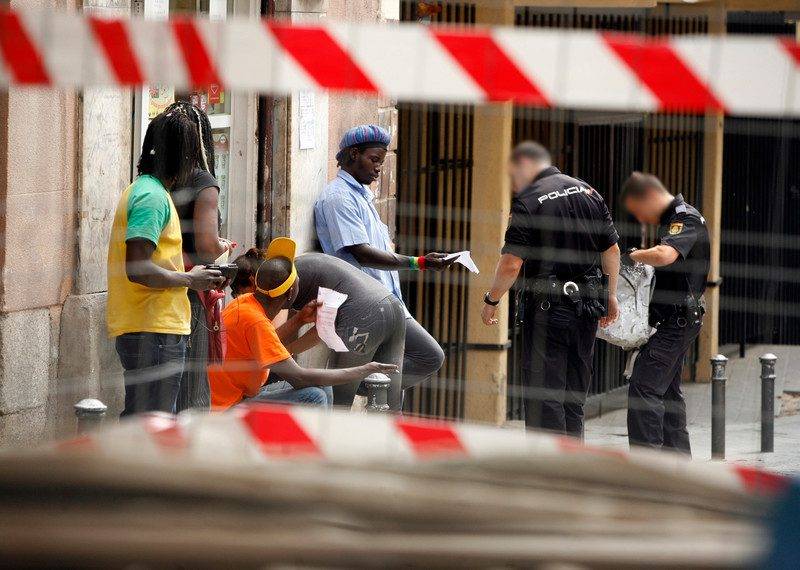
Amnesty International slams Murcia police for racist stop-and-search checks
A coalition of social organisations has called for greater accountability and transparency in identity checks across the Region
More than 20 social organisations gathered in Murcia city on Tuesday March 24 to mark the Day Against Racial Discrimination, using the occasion to decry what they describe as ongoing racial profiling in police stop-and-search practices across the Region of Murcia.
The protest formed part of a wider national mobilisation supported by nearly 400 organisations. Demonstrations elsewhere in Spain echoed the same message under the slogan ‘Stop racism, not people’, highlighting concerns about the treatment of minority communities during routine police checks.
Among the most prominent voices was Amnesty International, which argued that the situation in Murcia is particularly troubling. According to the organisation, “this problem is worse than the national average”, although no specific data or figures were provided to support that claim.
Even so, the assertion was echoed by other groups involved in the demonstration, who insist that the issue is both persistent and under-addressed.
At the centre of the campaign is a call for greater transparency in policing. The organisations are urging authorities to introduce formal stop forms, which would require officers, whether from local police forces or State Security Forces, to clearly justify the reasons behind stopping an individual or requesting identification.
Advocates believe such measures would help prevent arbitrary checks and reduce the risk of discrimination based on race or ethnicity.
For many of those involved, the issue is not abstract but rooted in lived experience. Kaba Balde Sably, spokesperson for the Association of Senegalese People in the Region of Murcia, spoke candidly about the daily reality faced by some members of the community.
“Here, this issue is a constant struggle,” he said. “We ask that the decision to stop a person or subject them to a check is not based simply on the fact that they are black, come from Africa or are of another race. Unfortunately, we continue to see these checks carried out without the necessary justification and we do not see any improvements.”
The coalition of NGOs has taken its campaign beyond public protest. A draft motion has been sent to political groups in municipalities across the region, calling for the adoption of standardised stop forms by local police forces, and the same request has been formally submitted to both the Civil Guard and the National Police through the Federation of Municipalities and the Government Delegation.
While the proposal is framed as a practical step towards accountability, it also raises broader questions about trust between law enforcement and the communities they serve. Supporters argue that clearer procedures would protect both citizens and officers, ensuring that checks are carried out on legitimate grounds and can be reviewed if necessary.
For now, however, campaigners say progress remains limited. Despite repeated calls for reform and growing public attention, they maintain that little has changed on the ground.
Whether the latest wave of coordinated protests will prompt a meaningful response from authorities remains to be seen, but organisers insist they will continue to press the issue until concrete measures are introduced.
Last month, a study found that hate speech targeting people of foreign origin rose sharply in Spain, especially online on social media and relating to Muslim immigrants and the wearing of burkas.